18-848 Machine Learning for Radar



Radio Frequency (RF) sensing is a critical component of modern autonomous systems. For example, mmWave radars are ubiquitous in modern vehicles and a key part of autonomous driving systems. Due to their robustness, compact form factor, low cost, and privacy-preserving nature, RF sensing systems are also increasingly used for many indoor and human sensing applications.
To unlock the full potential of these sensors, we naturally turn to machine learning (ML), which has revolutionized how we approach sensing and perception, particularly in the computer vision community. However, to date, there has been relatively little overlap between the RF and ML communities, with relatively limited work on sensing methodologies which integrate RF and machine learning at a more fundamental level. Modern machine learning paradigms such as large-scale foundation models have also yet to be fully explored for the RF domain.

Overview
This research-focused course will provide students with ML and/or RF background the knowledge and skills needed to effectively engage in cross-disciplinary collaborations which push the frontiers of Machine Learning for RF.
The course will feature traditional lectures covering key background, such as the fundamentals of modern FMCW radars and machine learning research methodologies for scaling up ML research for novel domains, as well as research lectures covering the current state-of-the art and guest lectures from academic researchers and industry insiders. Students will also gain hands-on experience working with wireless systems such as mmWave radars and spectrum analyzers, as well as large datasets collected from these systems to develop, train, and apply modern machine learning techniques such as self-supervised learning and scaled-up transformer models. Finally, students will complete a research project applying Machine Learning techniques to mmWave radar or an RF system of their choice.
Course Objectives
Machine Learning and Radar Systems cover a broad range of topics, all of which must be integrated together to develop and deploy a modern state-of-the-art ML-enabled radar or wireless perception system. Indeed, the breadth of expertise which must work together to build such a system is so large that we believe that no single person could possibly master all of them.
Accordingly, the goal of this course is explicitly not to set a list of knowledge and skills which students must master, but rather to provide students with enough high-level context and understanding of the key concepts, problems, and tradeoffs in both machine learning and radar systems such that they can effectively collaborate with experts in complementary domains to push the frontiers of research in this area.
Prerequisites
This course is intended for graduate students and advanced undergraduate students. All students are expected to have some machine learning background (e.g., 10-202, 10-301, or 18-661), be familiar with programming in Python (e.g., to use ML frameworks such as Pytorch), and have at least undergraduate-level linear algebra and probability background.
In addition, students should either have further machine learning or wireless communications background:
-
Machine Learning
Any upper-division or graduate-level ML course, e.g., any 10-6XX or 10-7XX course.
-
Wireless Systems
Any wireless communications course, e.g., 18-750 or 18-452.
Assignments and Grading
Grading will be based on the following assignments:
Lab assignments (30%): students will individually complete the following labs:
- Radar systems (15%): configuring, collecting, processing, and visualizing data from a mmWave radar (AWR1843AOPEVM).
- Machine learning on radar data (15%): training a radar model and running ablations.
Note that these labs are not intended to be comprehensive, end-to-end projects; most of the software and hardware components will be provided for you, with the goal of making sure that you know how to use these tools, and can apply them to the course project (and hopefully your own work in the future).
Course project (50%): students will complete a course project in groups of up to 4 students (students may form groups of any size, including individually). Students are encouraged to form groups with complementary skill sets and to select projects which are aligned with other concurrent research activities if applicable.
Each project must involve some form of machine learning training and/or inference, and must involve some form of radar or other RF hardware, either for data collection and/or online deployment.
The project will be split into the following milestones:
- Project proposal (10%)
- Midterm progress report (10%)
- Final presentation (10%)
- Final report (20%)
Presentation and paper review (15%): students will present one or more papers of their choice from the radar, ML, and related literature as part of student-led discussions.
Class participation (5%): As a research-focused course, we understand that students often have conflicting commitments (e.g., conferences). We expect students to attend and actively participate whenever possible, and notify the instructors in advance if they will be unable to attend class. We may also ask students to make specific preparations (e.g., discussion questions) in advance of guest lectures.
Topics
This class is not a conventional lecture-based course, and will be roughly split into three components:
-
Introductory Lectures: lectures covering the fundamentals of radar and machine learning with a focus on understanding key concepts, tradeoffs, and considerations.
Crucially, our goal is to provide enough high-level understanding that students can effectively collaborate with experts in complementary domains. As such, while the radar and machine learning portions are primarily targeted at students with limited background in these respective areas, we aim to provide an orthogonal, high-level perspective which students with more experience will also find useful.
-
Student-led Seminars: students will lead discussions on papers of their choice covering the state of the art in domains such as wireless sensing, foundation models, computational imaging, simulation, and other areas of interest.
Students are encouraged to select papers which are aligned with their technical background and interests.
-
Guest Lectures: this course will feature a substantial number of guest lectures with speakers from both academia and industry, covering a wide range of topics related to radar and machine learning.
Guest Speakers


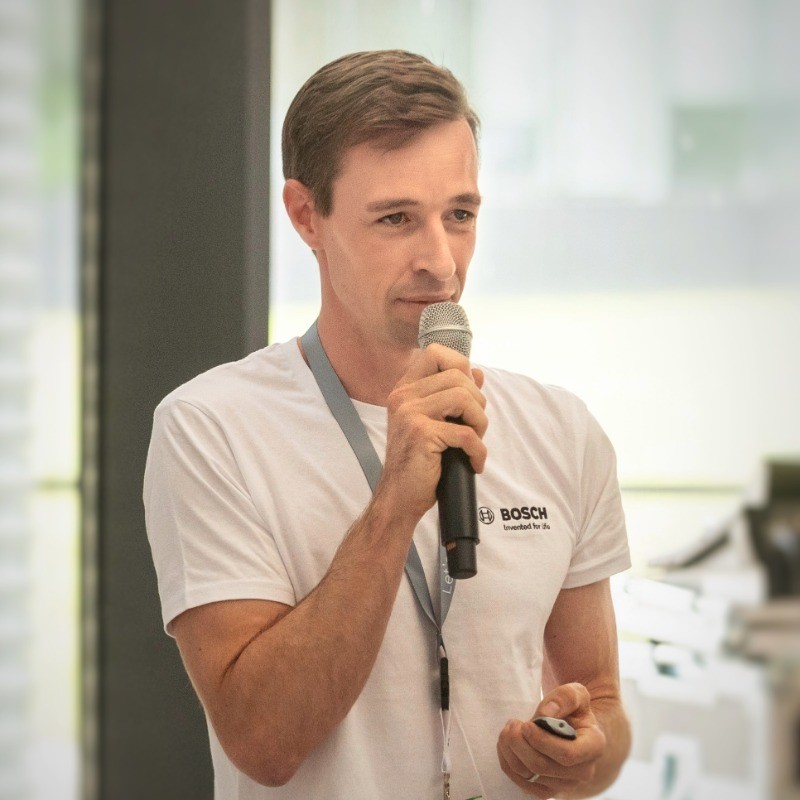


Schedule
Subject to change
The course schedule is subject to change, particularly with regards to the timing of guest lectures.
Updates will be announced in class; you can also check here for changes.
| 08/25 | Introduction & Logistics [slides] |
| 08/27 | Wireless Basics [slides] A crash course in wireless communications, providing a high level overview for students without wireless background and a review for students with wireless background. |
| 09/01 | Wireless Basics [slides] See Also: [I/Q] [Aliasing] [Phased arrays] |
| 09/03 | Intro Radar [slides] A crash course in radar systems and radar signal processing pipelines See Also: [Radar equation] [CFAR] [Radar resolution] |
| 09/08 | Intro Radar [slides] FMCW radars — like the ones you will be using in course (plus a demo!) See Also: [FMCW Radar Cheatsheet] [Pulse Compression] [FMCW] [Range-Doppler] Lab 1 assigned; radar lab kits available |
| 09/10 | Applied ML [slides] Everything you need to know to get started with applied machine learning Read Before Class: [Intro to ML] [Linear Regression] [Neural Networks] Register for NSF access and submit your username on canvas |
| 09/15 | Applied ML [slides] See Also: [Scaling Book] [15-642 MLSys] Lab 2 assigned |
| 09/17 | Radar Hardware [slides] What goes into a modern radar device? How do these components affect the signal, and what tradeoffs do they come with? See Also: [Amplifier Gain] [Amplifier Noise] [FMCW Radar Hardware] |
| 09/22 | Radar Systems [slides] What do modern radar devices and systems look like? What tradeoffs do engineers face across the perception stack? See Also: [DDM with Empty Bands] Submit discussion questions for 9/29 guest lecture |
| 09/24 | Guest Lecture — Michael Ulrich [slides] From Blips to Bounding Boxes: The Evolution of Automotive Radar Perception Lab 2 checkpoint ("Hello World, HPC!") due |
| 09/29 | Guest Lecture — Thomas Huang Lab 1 due |
| 10/01 | Foundation Models & Signals (+ Course Project Overview) What does it mean to train a foundation model? What happens when you try to do this with signals? |
| 10/06 | Foundation Models & Signals (+ Introduction to Seminar Topics) |
| 10/08 | Guest Lecture — Justin Chan Lab 2 due |
| 10/13 | Fall Break |
| 10/15 | Fall Break |
| 10/20 | Learning on Spectrum Project Proposal Due |
| 10/22 | Guest Lecture — Ray Huang Radar Odometry and SLAM |
| 10/27 | Learning on Spectrum |
| 10/29 | Guest Lecture — Matt O'Toole Frequency-wavenumber (f-k) migration |
| 11/3 | No class (democracy day) |
| 11/5 | Wireless Sensing Project progress report due |
| 11/10 | Guest Lecture — Matthias Hagedorn Automotive Radar Systems |
| 11/12 | Wireless Sensing |
| 11/16 | CVPR Submission Deadline |
| 11/17 | Imaging & Simulation |
| 11/19 | Guest Lecture Approximate date; Guest TBD. |
| 11/24 | Imaging & Simulation |
| 11/26 | Thanksgiving Break |
| 12/1 | Final Presentations / Demos |
| 12/3 | Final Presentations / Demos |
| 12/4 | Final report due |